


Psoriasis is a chronic disease and its course is undulating.This disease affects human skin and, more rarely, joints.Exacerbation of pathology occurs due to the influence of certain negative factors and is characterized by a worsening of symptoms.Then the disease subsides, a period of remission begins, which can also be replaced by an exacerbation.
Features of the course of the disease
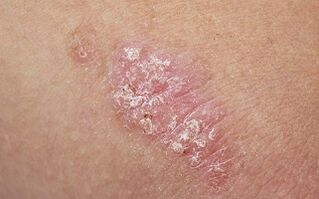
The disease manifests itself differently depending on the patient.Additionally, symptoms can vary from patient to patient, from small local lesions to extensive lesions affecting large areas of the skin.
Generally, the disease progresses with age.Over time, the periods of remission become shorter and shorter and the affected area increases significantly.
It is important to know what psoriasis looks like in its early stages and how it can be treated to prevent progression of the disease.
Causes of disease
According to most experts, this disease is a genetically determined pathology.If parents suffer from dermatoses, there is a high probability that the child will develop psoriasis when exposed to certain factors.
The factors that determine the beginning of the development of pathology are:
- allergic reactions;
- serious infectious diseases;
- decrease in the body's immune defense;
- diseases of the endocrine system;
- exhaustion of the nervous system.
In addition, long-term use of certain medications used to treat chronic diseases can be the cause of the development of the disease in a person prone to dermatoses.
Types and stages of the disease
There are two types of psoriasis: type 1 and type 2 diseases. Pathology of the first type is diagnosed in children and adolescents.The disease of this form is genetically determined, while the child's parents may be healthy, and in older generations there are cases of psoriasis.
Typically, this disease can be passed down over 3 to 4 generations.The first type of disease affects the skin and almost never affects the joints.
The second type of disease occurs mainly in middle-aged people, over 45 years old.A characteristic feature of this form of the disease is damage to the joints.
The disease develops slowly.There are 4 stages or stages of development of psoriasis:
- early (initial stage of psoriasis);
- progressive;
- stationary;
- regress.
The disease's favorite places are the elbows, head and torso.In rare cases, severe cases of the disease affect the flexor parts of the upper and lower limbs.
Initial stage of the disease
In the initial stage, psoriasis presents symptoms and signs of an allergic skin reaction.The disease begins suddenly, small reddish rashes appear on the skin.In childhood, symptoms and signs of psoriasis are often confused with diathesis or the manifestation of an allergic food reaction, making timely treatment difficult.
In young children, the manifestation of stage 1 psoriasis can be localized in areas prone to friction when wearing clothes, while in adults, the first signs of the disease are noted on the hands or body.
Over time, the papules (as pimples are called in psoriasis) cluster together, forming scaly plaques.Islets of the disease can become covered with grayish scales, which painlessly separate from the rash.All this is accompanied by swelling and irritation of the epidermis.
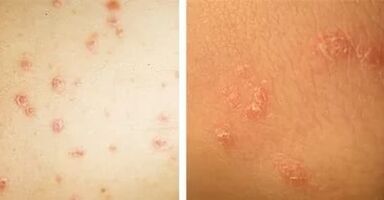
Many people are interested in whether psoriasis itches in the initial stage and how to recognize the symptoms of stage 1 skin psoriasis. The following signs will help determine what incipient psoriasis looks like:
- when the rash is scratched, the plaque turns white, the scales come off easily;
- if you continue to scratch, a smooth reddish spot (“thermal film”) forms at the location of the plaque;
- If you continue to scratch the resulting spot, it will become covered with small drops of blood due to point hemorrhages.
The above techniques are used when examining a patient and help identify psoriasis at an early stage.
The initial form of psoriasis can last up to a month.In some cases, exudate may be released at the sites of formed plaques.The sores become covered with a crust under which they become moist due to the release of fluid.This course of the disease can be complicated by the addition of infection and the appearance of an extensive inflammatory process.
Arthropathic form of the disease
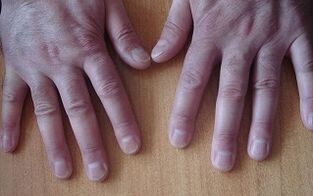
If the disease affects the hands, palms and the area between the fingers, the arthropathic form of psoriasis is diagnosed.This form is considered the most serious, because over time the skin becomes inflamed and cracks.There is a high probability of joint damage, which leads to the development of arthritis.This leads to loss of work capacity and disability for the patient.
This form of the disease is dangerous because it affects the nail plate, causing it to separate from the fingers.The arthropathic form of the disease is very difficult to treat and is characterized by frequent exacerbations.Due to inflammation and swelling of the skin of the hands, the patient experiences severe discomfort at work and at home, since any movement of the hands leads to increased pain.
Drug treatment

To the question of whether psoriasis can be cured at the initial stage, doctors, unfortunately, cannot give a positive answer.However, timely treatment will eliminate the acute phase of the disease and return the patient to normal life.
If initial psoriasis is diagnosed, treatment should only be chosen by a dermatologist after all examinations.Self-treatment without consulting a specialist may not bring the expected result and only worsen the course of the disease.
The possibility of curing psoriasis in the early stages largely depends on the degree of damage and the location of the resulting plaques.
The initial form of psoriasis is treated by the following means:
- ointments for local treatment of the skin;
- non-steroidal anti-inflammatory drugs;
- physiotherapeutic methods;
- diet adjustments;
- immunomodulators.
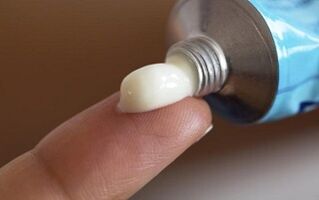
Ointments for treating affected skin are selected by the doctor depending on the degree of damage.Tar or fat-based preparations are generally used.For extensive skin lesions, treatment can be carried out with ointments containing corticosteroids.These medications have a number of side effects and are therefore only prescribed in cases of serious illness.The duration of treatment should not be long, and after the acute symptoms are relieved, these ointments should be replaced with milder preparations.
If psoriasis is diagnosed at a very early stage, only a doctor can tell you how to treat the disease.In some cases, a good effect is observed when using physiotherapy - paraffin baths or ultraviolet irradiation.
For psoriasis in the initial stage, home treatment should be agreed with a doctor.Having understood how psoriasis manifests itself at the initial stage, one should not delay a visit to a specialist, as the disease progresses rapidly.
An exacerbation may begin suddenly;in this case, folk remedies will help alleviate the patient's condition.For this purpose, medicinal baths are used with the addition of honey, medicinal herbs (chamomile, calendula), as well as natural oils.The goal of this treatment is to reduce itching and swelling, but it should be used in combination with medications recommended by a doctor.
The answer to the question of whether psoriasis can be cured at an early stage and whether psoriasis can be cured at the very beginning in children can only be given by the attending physician, based on the characteristics of the patient's disease.